
Like Lazy Pup said floor drains go into a grey area and often times gutter drains join them. The latest thinking in many areas is to separate combined sewers into separate sanitary and storm sewers. This lessens the load put on water treatment plants during heavy rains. Lessening the likelyhood of plant overflows. Storm water does not recieve treatment.
The skinny is we can't tell from here!
If you had some sweet water in your basement I would get your drains looked at ASAP. The person that you hire to clean them should be able to give you some advice, as to whether or not they are combined or, separate.
-
Originally posted by Redwood View Post
I had a little water in the basement the other day and it smelt a little sweet. Would that be sewage?
But it only does it when it rains. That should have nothing to do with the sanitary sewer just the storm drains. I have 2 gutter downspouts connected to drains on the outside of the house, would they be sewer or storm.Last edited by jtfoxman; 05-21-2009, 02:39 PM.Leave a comment:
-
Your floor drains may go to a storm sewer and not the sanitary sewer.
Given what you just said about water coming from a clean out and an old basement bathroom but not the floor drains I would suspect this.
I would also suspect that your sanitary sewer may have a blockage or retriction causing this water to appear. I would check that ASAP.Leave a comment:
-
I have that type of drain(bell) in my garage but my basement I double checked and it seems like I have traps. I popped the drain strainers and it is 2" pipe with water sitting at the bottom. I stuck a snake in it and I could feel the curve of the trap.
I do not need a cap then if I understand all the info you all have given me, correct? If i do I'll see if i can find some test plugs or other types of caps, because it seems that I am getting the water in my basement from a clean out plug and the old toilet drain that is located in an old bathroom. Would anyone know what size the toilet drain would be? But if the water is coming up through there and i cap them would water be forced up in my other drains. I don't understand why it comes up here and not in my floor drains.
I know I keep on adding more info, please bear with me this should be it.
Thanks for all the usefull information.Last edited by jtfoxman; 05-21-2009, 11:26 AM.Leave a comment:
-
The Trap that Lazy Pup is referring to is a bell trap.

Which are very problematic in terms of keeping a trap seal.
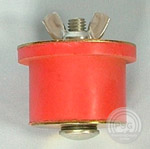
Pouring mineral oil into the drain to fill the trap is something I would consider. Also if the parts are missing or rusted out which is not at all oncommon I would consider pugging them using a test plug. This can be removed if flooding conditions warrant.
Leave a comment:
-
Basement floor drains fall into a rather gray area of the codes.
In some instances the house sewer enters at an elevation which is higher than the basement floor which would then make it impossible to attach floor drains to the sanitary sewer without installing a "sewage lift pump". In this instance we may run the floor drains to a sump pit. When attaching floor drains to an open sump pit we are not required to install P-traps under the floor drains.
If the house sewer line enters the structure at an elevation which is below the basement floor the floor drains should be plumbed into the house DWV (drain, waste & vent) system. All drains connected to the DWV system are required to have a trap to prevent sewer gasses from entering the structure.
In most regions the codes now require a floor drain receptor that is very similar to the floor drain in a shower stall. Just a covered receptor that goes straight into a P-trap however years ago it was common to use a cast iron style of floor drain receptor that had short vertical standpipe in the receptor that kept a ring of water surrounding the drain pipe. The lid then had a short length of pipe extending downward from the underside of the lid so that when the lid was in place the pipe extended below the surface of the water in the outer ring of the receptor. As water entered the drain through a ring of holes in the outer circumference of the lid it then went into the receptor bowl and flowed up under the pipe extending down from the lid, over the standpipe in the receptor bowl and on down the drain. (see attached illustration). The problem with this type of floor drain receptor was that often a homeowner would lift the lids to snake a drain or increase the flow into the drain line, and in the process the lids did not get placed back on the receptor, thus the drain line was left open without a trap and allowing potentially dangerous sewer gasses to enter the structure. If you have this type of drain receptors your plumbing inspector was absolute correct on insisting that you get the proper lids for your drains. The alternative is to remove those receptors and install the modern style that are connected to a P-trap.
If you ccan not locate the original covers for your floor drains you might be able to find replacements at a commercial plumbing supply house, but don't even bother to look for then in the big box home supply stores.
It should also be noted that, as Redwood previously stated, most codes now require that all floor drains be fitting with a trap primer. A trap primer is a small tap that is attached to a nearby sink drain and it has a small diameter line that runs to the floor drain. Whenever water is discharged from that sink a small portion of the water is diverted to the floor drain to periodically refill the traps to insure they will not dry out and permit sewer gasses to enter.Leave a comment:
-
Re :Basement floor drains
Rain and ground water go to a sump pump, your floor drain should go to your sanitary sewer by either gravity or by a pump. the water holding in the floor drain is normal , a floor drain is trapped under the floor and hold s water so you don't get sewer gas in the house. The elvation of water in the trap doesn't have to be the same as your neighbor,
it all depends on the depth of the sewer under your floor,Leave a comment:
-
Basement has a water problem on occassion. It has to rain a lot or have a large snow melt off. Couple times a year in certain areas. Not flooding maybe an inch in one part of the basement that houses the washer and dryer and an old bathroom with no fixtures.
Water heater drain just drains onto the floor near a floor drain, all sloped towards the drain.
No A/C drainLeave a comment:
-
If they are part of the sanitary sewer system they better have traps.Originally posted by HayZee518 View Post
They also should have trap primers...
The home inspector?
I'm still questioning the need to cap them...
I question the credibility of most home inspectors...
Does this basement ever have a water problem?
Where does the water heater T&P drain go to?
Condensate Drain for A/C?Last edited by Redwood; 05-20-2009, 08:00 PM.Leave a comment:
-
Wow! The plug dissolved, that's amazing. I think I'll try the local DIY store then if not I'll try to find some logs.
Thanks.Leave a comment:
-
I went to another screen and searched for drain plugs and didn't find much. I would suggest a chunk of oak log tapered to fit the drain and hammered in tightly. there was one blog that had a plumber install a rubber plug but the thing dissolved after two weeks. wood expands when exposed to water. another way - "rube goldberg" plug use screening then oakum with a plug from hydraulic cement. hydraulic cement expands on curing - regular cement shrinks.Leave a comment:
-
So what is the best way to cap them. I have 2 that are in the floor both with screening over them. And I have 1 that used to be a toilet drain that is uncovered due to no toilet.
Forgot to add that the floor is concrete and the cast iron drain pipes are flush with the top of the concrete floor.Last edited by jtfoxman; 05-20-2009, 03:38 PM.Leave a comment:
-
probably the reason is that they are part of your effluent drain. a backup of the drain would cause sewage to come up. the floor drains have no trapsLeave a comment:

Leave a comment: